
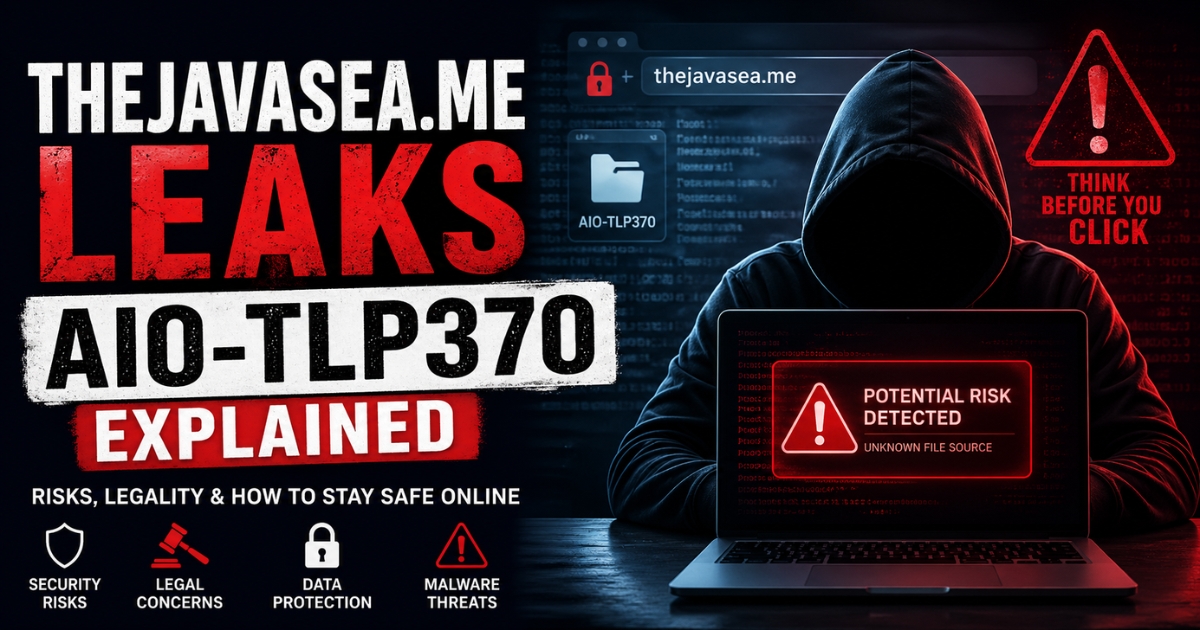
The term thejavasea.me leaks AIO-TLP370 has gained attention online as people search for information about what it means, where it came from, and whether it is safe to explore. Like many leak related keywords, it can attract curiosity, but it can also create serious privacy and security risks for users who do not understand what they are clicking. Before interacting with any website, file, or post connected to thejavasea.me leaks AIO-TLP370, it is important to know that leak related pages are often used to spread malware, steal personal data, or trick users into unsafe downloads. This guide explains the topic clearly, without encouraging access to leaked or unauthorized content.
What Is Thejavasea.me Leaks AIO-TLP370?
Thejavasea.me leaks AIO-TLP370 appears to refer to online content connected with a leak based website and a file, package, or data label known as AIO-TLP370. The exact nature of this term can vary depending on where it is mentioned, but most users search for it to understand whether it is a software package, leaked data collection, tool archive, or suspicious online file. The important point is that leak related keywords are rarely simple. They may involve unauthorized files, private information, pirated software, cracked tools, or fake download pages. Even when a page claims to offer a useful file, users should treat it as suspicious until proven otherwise.
Why Is Thejavasea.me Leaks AIO-TLP370 Trending?
The keyword is trending because it creates curiosity. People see the term on search engines, forums, social platforms, or questionable websites and want to know what AIO-TLP370 actually contains. Cybercriminals often take advantage of this curiosity by creating pages that look informative but are designed to push unsafe downloads. When a term like thejavasea.me leaks AIO-TLP370 starts getting searches, fake websites may appear quickly. Some may promise access to hidden files, premium tools, private data, or exclusive content. These pages can be risky because they often use misleading buttons, forced redirects, pop ups, or password protected files that contain malware.
Is Thejavasea.me Leaks AIO-TLP370 Safe?
There is no reliable reason to treat thejavasea.me leaks AIO-TLP370 as safe. Any website or file connected to leaks should be approached with caution. Leak platforms are often unregulated, anonymous, and filled with content that may violate privacy, copyright, or security laws. The biggest risks include malware, phishing, identity theft, browser hijacking, unwanted software, and stolen login credentials. Even visiting a suspicious website can expose users to tracking scripts, fake verification pages, or malicious ads.

Main Risks of Leak Related Websites
Leak related websites can be dangerous because users often visit them without knowing who controls the content. A file may look harmless but contain hidden code that runs in the background. A download button may lead to a fake installer. A login form may steal your email and password.
Some common risks include:
- Malware hidden inside ZIP or EXE files
- Fake browser updates
- Phishing pages asking for login details
- Pop ups that install unwanted extensions
- Stolen personal information
- Legal issues linked to unauthorized content
- Financial fraud through fake payment pages
Legal and Privacy Concerns
Leak based content can involve private data, copyrighted material, paid tools, personal accounts, or confidential files. Accessing, sharing, or downloading such material can create legal problems, especially if the content was obtained without permission. There is also a privacy concern. If a file contains leaked personal data, viewing or spreading it can harm real people. Responsible users should avoid participating in the distribution of unauthorized information and should focus on protecting their own devices and accounts instead.
Could AIO-TLP370 Contain Malware?
Yes, it is possible. Unknown files connected to trending leak keywords are often used as bait. Cybercriminals know that people searching for leaked packages may be more likely to ignore warnings. They may hide malware inside compressed folders, fake tools, scripts, installers, or documents. A file connected with thejavasea.me leaks AIO-TLP370 could potentially include spyware, keyloggers, ransomware, trojans, or password stealers. These threats can monitor your activity, steal browser saved passwords, lock your files, or send your personal data to attackers.
What To Do If You Already Clicked a Suspicious Link
If you already clicked a link related to thejavasea.me leaks AIO-TLP370, do not panic. Take immediate steps to protect your device and accounts. First, close the website and do not download anything. If a file was downloaded, do not open it. Delete the file and empty your recycle bin. Run a full antivirus scan using a trusted security tool. Check your browser extensions and remove anything unfamiliar. Next, change passwords for important accounts, especially email, banking, cloud storage, and social media. Enable two factor authentication where possible. If you entered your login details on a suspicious page, change that password immediately.
How To Protect Yourself Online
The safest approach is to avoid leak related websites completely. Do not trust pages that promise free access to private tools, premium files, or hidden archives. If something looks too good to be true, it probably is.
Use these safety habits:
- Keep your browser updated
- Use strong unique passwords
- Enable two factor authentication
- Avoid unknown downloads
- Scan files before opening them
- Do not enter personal information on suspicious pages
- Use trusted websites only
- Back up important files regularly
These simple steps can reduce your risk from malware, phishing, and data theft.
Safer Alternatives to Leak Sites
Instead of searching for leaked files, use official sources, trusted software marketplaces, open source repositories, and verified company websites. If you are looking for a tool, search for its legitimate version. If you are researching a security incident, read trusted cybersecurity blogs or official advisories. For privacy protection, use password managers, breach monitoring services, and account security tools. These options are safer than visiting unknown leak pages.
FAQs
What is thejavasea.me leaks AIO-TLP370?
It appears to be a leak related keyword connected to a website and an unknown file or package label. Users should treat it with caution because the content may be unsafe or unauthorized.
Is thejavasea.me leaks AIO-TLP370 safe to download?
No. Unknown leak related files can contain malware, spyware, or phishing tools. It is safer not to download or open anything connected to it.
Can visiting leak websites harm my device?
Yes. Some websites use malicious ads, redirects, fake buttons, and scripts that can expose your device to security risks.
What should I do if I downloaded a suspicious file?
Do not open it. Delete the file, run a full antivirus scan, check your browser extensions, and change important passwords.
Why do people search for thejavasea.me leaks AIO-TLP370?
People usually search for it because they want to understand what it is, whether it is real, and whether it is safe. The safer approach is to treat it as a cybersecurity risk.
Final Thoughts
Thejavasea.me leaks AIO-TLP370 is a keyword that attracts attention because of curiosity around leaked content. However, leak related websites and unknown files can expose users to malware, scams, privacy risks, and legal problems. The safest choice is not to download or interact with suspicious files connected to this term. Focus on device security, password protection, and trusted sources. Curiosity should never come at the cost of your personal data, financial safety, or online privacy.