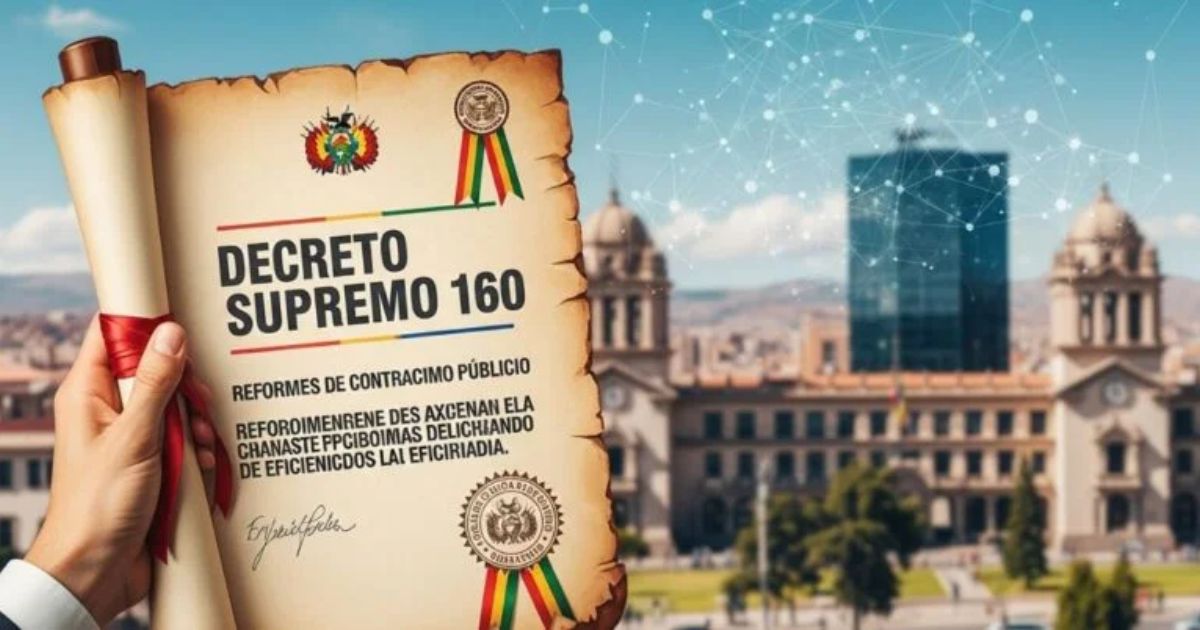
When you have typed the term Decreto Supremo, then you are probably trying to find out what exactly it is and how it works in the legal process, and whether it should be applied to your organization or not. This is a very common name in official publications, such as El Peruano Decreto Supremo hoy updates, but it is seldom discussed in a practical context.
This guide dissects what a Decreto Supremo is, its operation, and the different versions to use, and the appropriate compliance measures to be undertaken by organizations.
What Is a Decreto Supremo?
A Decreto Supremo (Supreme Decree) is a regulation tool employed by the executive arm of government. The President and the concerned ministry usually sign it. A Decreto Supremo does not establish primary legislation, as a law passed by Congress would do. Instead, it:
- Regulates an existing law
- Gives implementation regulations.
- Determines technical standards.
- Determines compliance processes.
In most countries, particularly in Latin America, before it becomes legally binding, the Decreto Supremo is issued in the official gazette.
Why Context Matters
One significant clarification: The word Decreto Supremo is not one universal rule.
For example:
- In Peru, it is frequently updated in El Peruano Decreto Supremo hoy publications.
- In Bolivia, one such regulation, such as Decreto Supremo 5484, can be applied in a totally different area of law.
- Decreto Supremo 40 governs the prevention systems of occupational risks in Chile.
Topics with completely different subject matter can be assigned a similar numbering system by country of origin and year of publication.
In order to interpret any Decreto Supremo accurately, you must establish:
- The country
- The year of issuance
- The industry in question (labor, environment, finance, etc.).
Legal Hierarchy In Which Category Does a Decreto Supremo Fall?
The rank of hierarchy is as follows in most legal systems:
- Constitution
- Statutory Laws
- Decreto Supremo
- Ministerial Resolutions
- Internal Guidelines
A Decreto Supremo is one on which the law is based. It is not able to overrule the constitution but it may have binding obligations upon its publication.
Areas of Common Law Decreto Supremo
A Decreto Supremo is often found in the following forms although the text will depend on the jurisdiction:
Environmental and Safety Regulations
Many Supreme Decrees define:
- Emission standards
- Handling material of hazard.
- Workplace safety rules
- Reporting obligations
As an illustration, the Decreto Supremo 40 of Chile is devoted to the occupational risk prevention frameworks.
Public Administration
A Decree Supremo can govern:
- Digital government systems
- Government procurement processes.
- Records management in institutions.
In Peru, the updates are frequently proclaimed with the help of El Peruano Decreto Supremo hoy notices.
Financial and Economic Policy
Some decrees address:
- Tax adjustments
- Customs procedures
- Compliance through administration.
An example of how numbering can be used with economic or administrative reform is Bolivia Decreto Supremo 5484.
Form of a Decree of Supremo
The vast majority of the Supreme Decrees are organized in the same way:
Purpose and Scope
Makes what is controlled by the decree.
Legal Basis
Cites the legislation that allows the regulation.
Definitions
Elucidates technical terms.
Obligations and Standards
Outlines compliance requirements.
Oversight and Sanctions
describes the punishment, inspections, enforcement mechanisms.
Transitional Provisions
Defines deadlines and periods of adaptation. With this structure in mind, it is much easier to review a Decreto Supremo.
How to find the proper Decreto Supremo
Since numbers may be repeated, take this step by step approach:
Step 1: Confirm the Country
Check authority and authority gazette.
Step 2: Verify the Year
This may be a same number in other years.
Step 3: Identify the Sector
Labor, environment, public administration, finance, etc.
Step 4: Use Official Sources
Preferably, put emphasis on government publications or gazettes.
Flexible Compliance Strategy
When your organization is subject of a Decreto Supremo, then make use of a systematic method.
Conduct a Gap Analysis
Compare actual practices to regulations.
Formulate an Implementation Plan.
delegate duties and establish deadlines of compliance.
Update Documentation
Maintain:
- Policies
- Training records
- Monitoring reports
- Audit trails
Monitor Regulatory Updates
Amendments to tracks that are made in official gazettes.
Common Compliance Mistakes
To achieve and succeed, organizations usually have a hard time because they:
- Disregard definitions sections.
- Missing time constraints.
- Not follow up implementation steps.
- Suppose that a Decreto Supremo is optional.
After coming into effect, there is a mandatory compliance.
Research Hints to More Legal Accuracy
In order to study a Decreto Supremo:
- Use official gazettes first
- Add the year and the country to your search.
- Compare with literature in ministry.
- Confirm amendments and changes.
Where a text is being revised such as El Peruano Decreto Supremo hoy, ensure that the text supersedes or amends a previous version.
What This Implicates on Businesses
In the case of private companies a Decreto Supremo may need:
- Process changes
- Equipment upgrades
- Staff retraining
- New compliance reporting
Lack of compliance will result in fines or operation bans or tarnished reputations. In the case of such public institutions, it might involve procedural changes or digital system modifications.
Frequently Asked Questions
What is a Decreto Supremo?
A Decreto Supremo is a presidential decree that is issued by the President and the ministry concerned to establish or give further clarification to an already existing law. It gains a legal force when it is officially published.
Is a Decreto Supremo equivalent to a law?
No. The legislature passes a law and the law is governed or enforced by a Decree Supremo. It works below the statutory laws and higher than internal administration rules.
What is the official place of publication of a Decreto Supremo?
It is issued in various countries in the official gazette. In Peru, they can be updated in El Peruano Decreto Supremo hoy announcements.
What is Decreto Supremo 40?
One of the regulations that are utilized in Chile that center on occupational health and safety compliance is Decreto Supremo 40 which concentrates on the risk prevention systems within workplaces.
What is Decreto Supremo 5484?
A decree Supremo 5484 is one of the executive regulations passed in Bolivia. The scope varies depending on the year and area of policy it covers.
Final Thoughts
A Decree Supremo, is a very potent executive regulation tool that is given by the executive arm to enforce the existing laws. It is also influenced purely by the nation, industry and the year of issue.
Whether you are reading Decreto Supremo 5484, examining compliance requirements under Decreto Supremo 40, or checking updates in El Peruano Decreto Supremo hoy, the trick is to do research in a structured manner and documented and put it into practice.