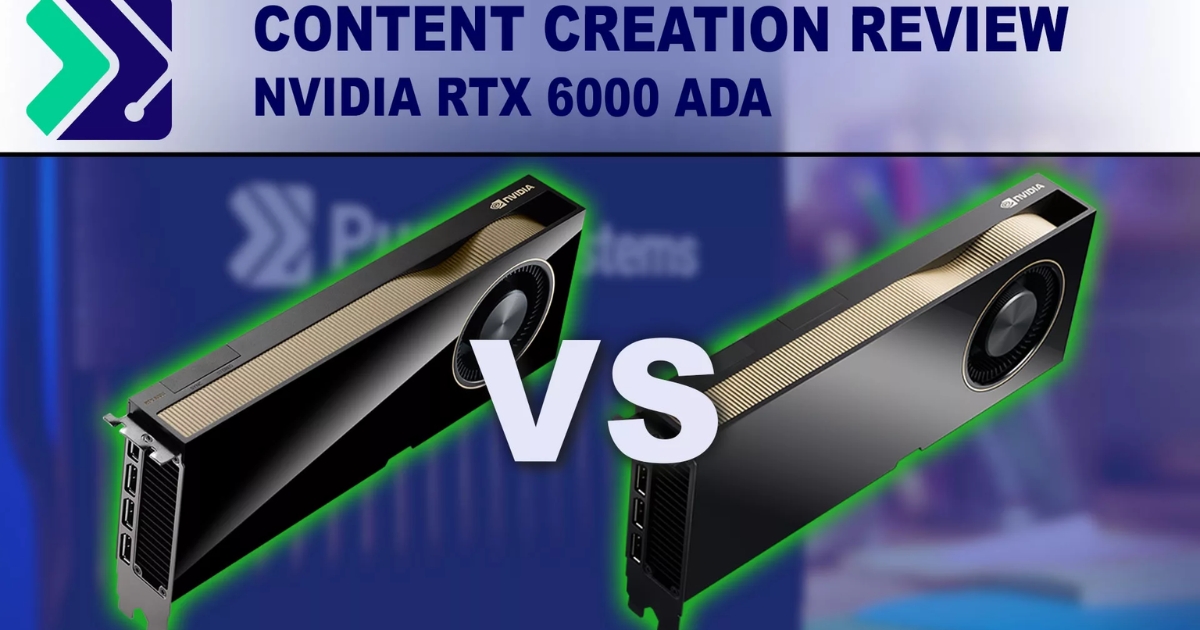
The NVIDIA RTX 6000 Ada Generation 48 GB is one of those graphics cards that feels almost unreal in its power. It’s built for professionals who work on massive design projects, AI research, or 3D animation that normal systems simply can’t handle. But even with all that strength, one question always matters: is your system balanced enough to let it perform at its best?
That’s where bottleneck calculation comes in. A bottleneck is what happens when one part of your computer slows down another. It’s like trying to pour water through a straw no matter how fast you pour, the straw decides the speed. In computers, this usually happens when your CPU or RAM can’t keep up with the GPU’s speed. Understanding how to calculate and fix bottlenecks helps you get the best performance from a powerful card like the RTX 6000 Ada.
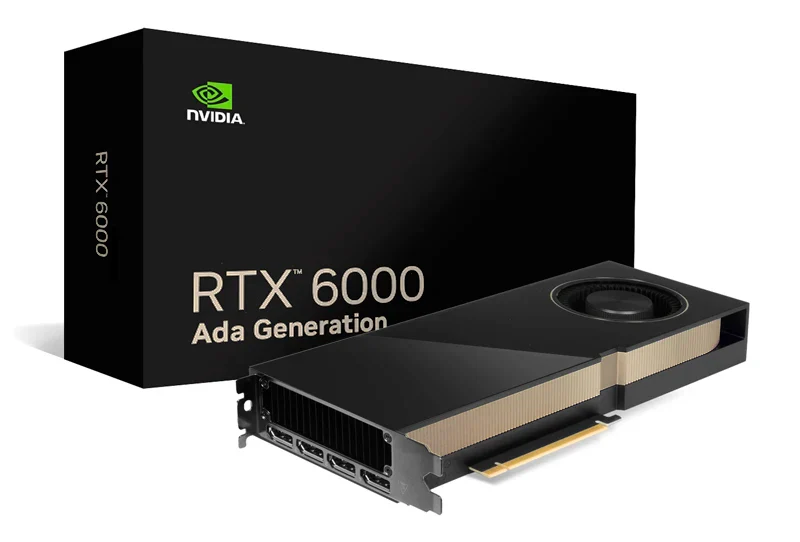
PNY VCNRTX6000ADA-PB RTX 6000 Ada Generation 48 GB Bottleneck Calculation NVIDIA RTX 6000 Ada
The PNY RTX 6000 Ada is based on NVIDIA’s latest Ada Lovelace architecture. It has 48 GB of GDDR6 memory and a massive number of cores, which means it can handle almost any professional task from real-time rendering to AI training. But this much power also means it depends heavily on the rest of your hardware.
If your processor can’t send data fast enough, or your RAM is too small, the RTX 6000 will slow down even though it’s capable of more. That’s why bottleneck testing is so important. It helps you see how well your CPU, GPU, and memory work together and whether any part is holding back the overall performance.
Overview of the PNY VCNRTX6000ADA-PB RTX 6000
Specifications
The RTX 6000 Ada comes with over 18,000 CUDA cores and runs on 48 GB of fast ECC GDDR6 memory. It uses a 384-bit interface, which means it can move data at extremely high speeds. It also supports PCIe 4.0, which helps the GPU and CPU communicate faster. The total power draw is around 300 watts, showing that this card is built for heavy, professional use rather than casual setups.
Also Read: Building a versatile PC for work
Features NVIDIA RTX 6000 Ada
This GPU supports NVIDIA’s latest technologies, like DLSS 3, real-time ray tracing, and advanced AI acceleration. It can drive several 8K displays, handle massive 3D projects, and manage complex AI models. The ECC (Error Correcting Code) memory ensures stability by preventing data errors, a key factor for professionals who can’t risk inaccuracies.
All of these features make it more than a graphics card; it’s a full performance engine designed for creative and technical professionals.
Bottleneck Calculation Methodology
Defining Bottleneck
A bottleneck happens when one part of your system limits another. In the case of this GPU, the bottleneck usually comes from the CPU. The RTX 6000 Ada is incredibly fast, and if your processor isn’t equally powerful, it won’t be able to send instructions quickly enough. The GPU will sit idle, waiting for data and that wasted time means lost performance.
Think of it like teamwork. If one person on your team works much slower, the whole project slows down, no matter how hard others work. That’s exactly how a bottleneck works inside your PC.
Calculation Parameters
To check for a bottleneck, you look at how busy your CPU and GPU are during a task. If the CPU stays near 100% usage while the GPU sits much lower, that means your CPU is the limiting factor. On the other hand, if the GPU is maxed out while the CPU isn’t, then your GPU is the one being fully used and that’s usually a good sign for heavy graphics work.
Different tasks create different results. For gaming, CPUs often matter more at lower resolutions. For AI, rendering, or 3D workloads, the GPU takes the lead. So bottleneck calculation isn’t a fixed number, it’s about balance in real-world conditions.
Performance Analysis
Resolution Impact
Resolution affects how your GPU and CPU share the load. At lower resolutions, like 1080p, the GPU finishes frames quickly and waits for new instructions from the CPU. If the CPU isn’t fast enough, you’ll see a performance drop even though the GPU isn’t working hard.
As you move to higher resolutions, like 4K or 8K, the GPU has more to do and the bottleneck shifts. Here, the RTX 6000 Ada shines. It loves heavy workloads and complex visuals because its power finally gets used to the fullest.
Game Performance Metrics
Although the RTX 6000 Ada is a workstation GPU, it can still play games easily. In 4K gaming, most modern titles run smoothly without frame drops. If paired with a strong CPU like the Ryzen 9 7950X or Intel i9-14900K, bottlenecks are minimal. But if your processor is older or slower, you might notice uneven performance, especially in CPU-heavy games.
Still, it’s important to remember that this GPU isn’t made for gaming, it’s designed for professional environments where precision, stability, and consistent output matter more than frame rate alone.
Comparative Analysis
Similar Graphics Cards
Compared to older models like the RTX A6000 or RTX 5000 Ada, the RTX 6000 Ada offers a huge improvement in performance per watt. It’s faster, more efficient, and handles bigger workloads thanks to its updated architecture.
While the consumer RTX 4090 might seem close in raw performance, the RTX 6000 Ada is built for reliability, not just speed. It’s tested and optimized for long hours of work without overheating or performance dips.
CPU Compatibility
Pairing this GPU with the right CPU is crucial. If you use a low-tier or older CPU, you’ll never get full performance. The RTX 6000 Ada works best with CPUs like the Ryzen 9 series or Intel’s latest i9 processors. These chips can handle multi-core workloads, making them ideal for rendering and AI tasks.
You should also make sure your motherboard supports PCIe 4.0 and your power supply is strong enough to feed both the GPU and CPU efficiently.
RAM Recommendations
Memory plays a huge part in system balance. For a GPU like this, 32 GB of RAM is the bare minimum, while 64 GB or even 128 GB gives you a smoother experience for AI, 3D rendering, or large video editing projects.
Fast RAM (DDR5 if possible) helps the CPU send data quickly to the GPU, reducing small delays that add up during long processing tasks. The goal is to keep all components working together, no waiting, no wasted power.
Real-world Application Scenarios
Gaming
If you try gaming with this GPU, you’ll notice something interesting: the performance feels effortless. It can handle 4K and even 8K gaming, though that’s not its main job. The bigger question is whether your CPU can keep up. In some CPU-heavy games, you might see frame drops if your processor isn’t strong enough. But with a modern setup, the gameplay stays smooth and steady.
Also Read: Optimize Your GeForce RTX 5070 Performance with Our Bottleneck Tool
Professional Workloads
This is where the RTX 6000 Ada truly belongs. It’s built for work that pushes every part of a system animation, visual effects, AI training, architecture design, and scientific visualization. The 48 GB memory allows it to manage huge datasets and render complex scenes in one go.
In real projects, bottlenecks usually come from CPU speed or slow storage, not the GPU itself. When properly matched with powerful components, the RTX 6000 Ada delivers consistent high performance across long hours of processing, making it a favorite among professional creators.
Conclusion
The NVIDIA RTX 6000 Ada Generation 48 GB isn’t just a graphics card, it’s a complete computing powerhouse. But even the most advanced GPU can’t perform at its best without the right support from the rest of the system. Bottleneck calculation helps you find that balance.
When paired with a strong CPU, fast RAM, and reliable power, this GPU performs like a dream fast, efficiently, and stable. It doesn’t just process images; it accelerates creativity and helps professionals work faster with full precision.
The key takeaway is simple: the RTX 6000 Ada will only be as fast as the system around it. Build that system wisely, and you’ll never have to worry about bottlenecks stealing your performance again.
Also read more information.